
The Problem of Certainty
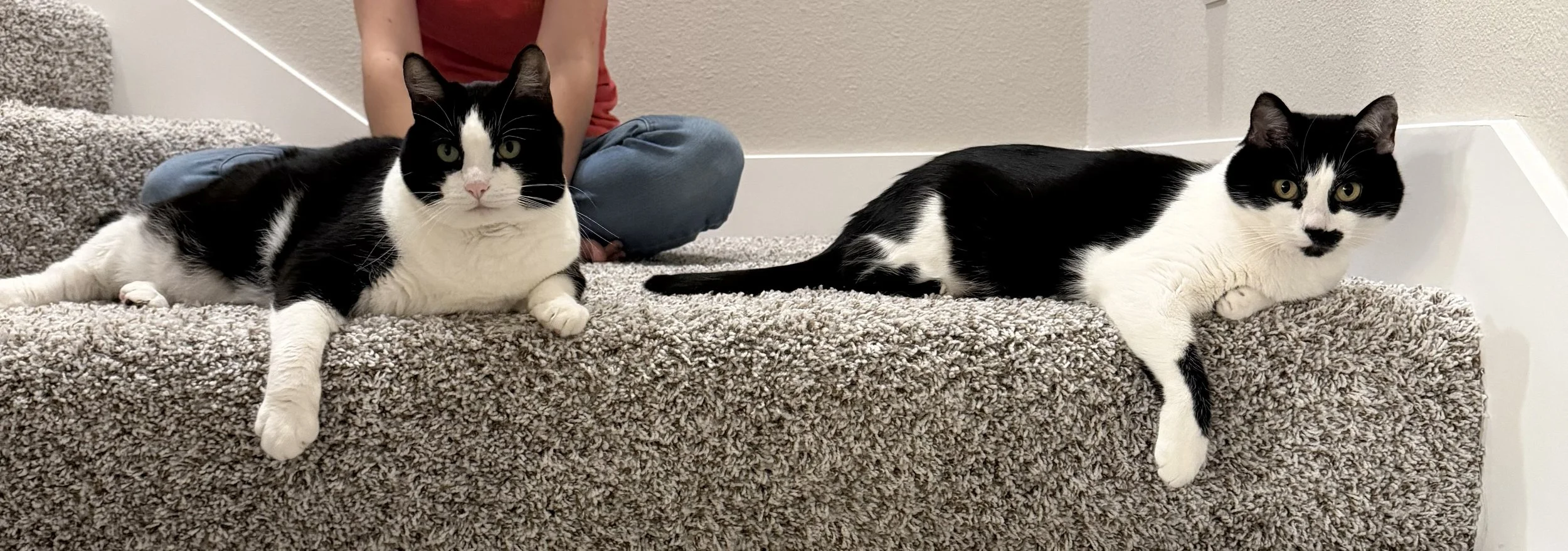
Dandy on the left, Daisy on the right.
It’s hard being right all the time.
Okay, obviously I know I am not right all the time; however, I do often assume I am right, at times to my own detriment. In fact, I was confronted about this during my time as a student chaplain at the VA. Part of the Clinical Pastoral Education (CPE, the process through which people learn to be chaplains), is a weekly meeting with one’s educator. This person is an experienced chaplain, usually with many years of CPE alongside some professional chaplaincy experience. These meetings amount to free therapy at times, as the topics usually center around how events from the past week impacted you emotionally and spiritually. It was in one of these one-to-one meetings that my educator said something I have really wrestled with ever since. He said, “If you’re always right, that means everyone else must always be wrong.” In other words, my certainty that I was right was cutting off my ability to be curious and open to the person in front of me.
This was a problem as a chaplain because it meant that I could not approach my peers with curiosity when they shared stories of their work or difficult moments from their weeks, but it also meant that I was cutting myself off from the people I was visiting. I would enter a room so certain of how they would react to me or to something I said, that I was starting conversations defensively, trying to circumvent whatever it was I “knew” would happen.
My certainty isn’t reserved for the hospital room or for chaplaincy, though. I would guess your’s isn’t either. On Sunday, we’ll see how Jesus calls out the certainty of Pharisees and “experts in the Law” in a story from the Gospel of Luke. In chapter 11, we encounter this pretty remarkable story wherein Jesus is invited to eat at the home of a Pharisee. When he sits down, his host notices that he didn’t wash his hands, and confronts Jesus about the oversight. That confrontation leads to Jesus launching into a condemnation of everyone around the table. His condemnations seem wide-reaching, but they all boil down to this same idea: certainty blocks curiosity and squelches connection.
As we wrap up this series, we’re closing with a fun Sunday. Our late service will include a blessing of the animals. This blessing is a connection to heroes of faith like St. Francis of Assisi whose work reminds the Church of our duty to all of Creation, but it is also an act of radical hospitality. When we take the time to make our worship space open to creatures that aren’t human, we acknowledge that all of God’s Creation is important. We begin to pull at our walls of certainty that tell us the birds and the bees and the sycamore trees are all just scenery to our actions here on earth, and open up our curiosity to see how God is present to, with, and through our pets just as much as to, with, and through us humans.
I hope to see you Sunday, whether for 8:30 worship or 10:45 when we bless the animals. Whenever I see you, I hope to hear about how you have looked for ways to get curious about the people and the world around you. Because that curiosity is where true hospitality starts.
See you Sunday, friends!
In Grace,
Rev. Tim
